Kathy Ruiz Tello: Rescuing Indigenous Knowledge for Food Sovereignty of her Huitoto Community - IPLC Climate Leaders
Indigenous Peoples & Local Community Climate Leadership Series
Voices from the Frontline, 2022
As part of our contribution to the deliberations at the UN Climate Change Convention discussions at COP-27 in November 2022, we want to promote the voices of Indigenous and Traditional Leaders working at the frontlines of climate change and biodiversity conservation, helping every day to protect and restore our natural habitats in the field. The article that follows is adapted from an interview with Indigenous Huitoto leader Kathy Ruiz Tello, Amazonia Indigenous Women’s Fellowship Program.
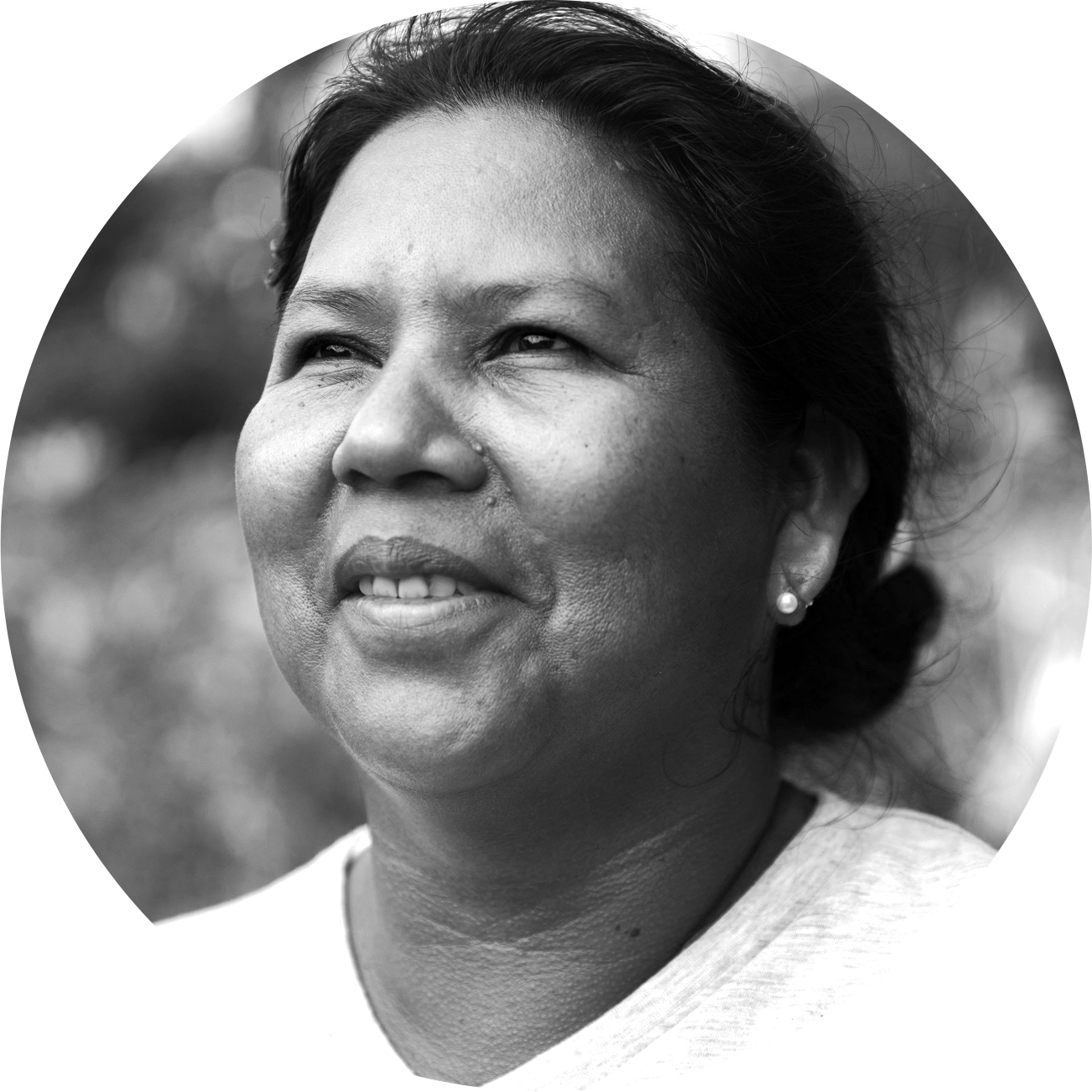
Image © Diego Pérez / SPDA - Conservation International
Kathy, could you please describe your background and experience?
I grew up in the native community of Remanso, my ethnicity is Murui, which means Huitoto. My parents are from Remanso, on the edge of the Putumayo River in the district of Yaguas, Peru, near the Colombian border. There are about 89 families living in Remanso, and I live here with my father and mother, my husband and two children.
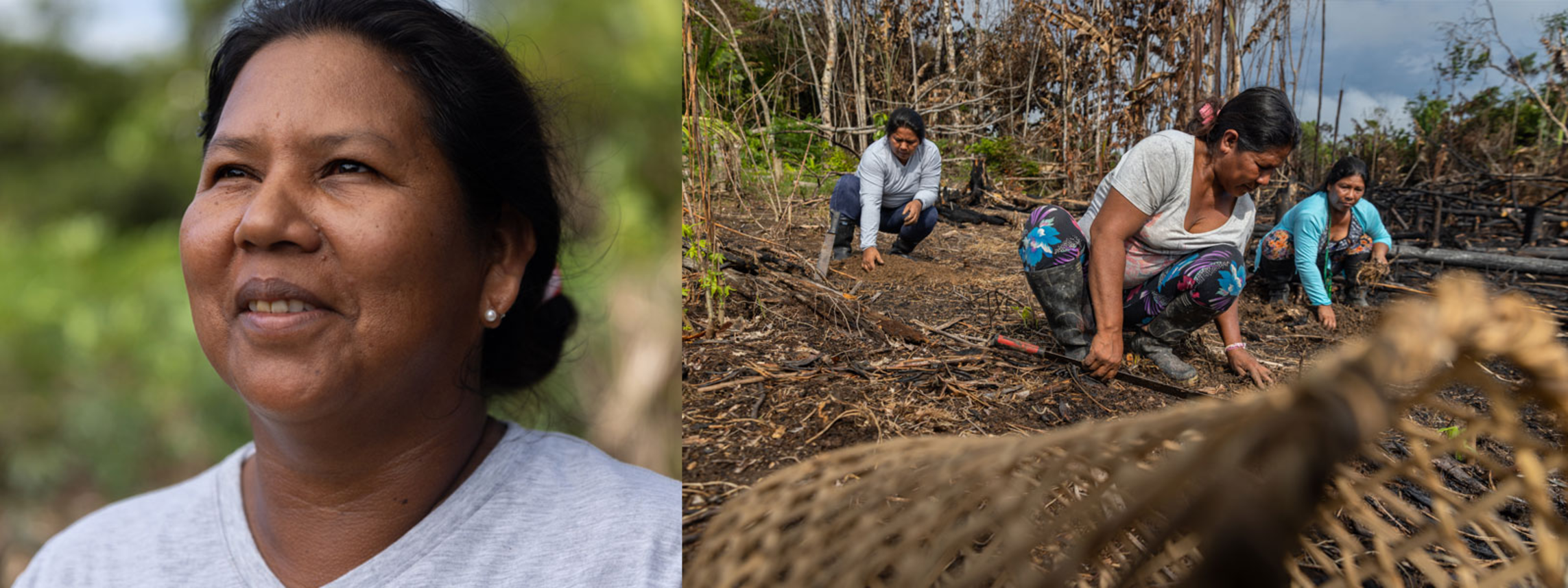
We are indigenous, and our livelihood is from agriculture and fishing. I have been a woman leader in the village, and deputy mayor of Yaguas. In Remanso, I have been carrying out a project for women leaders to recover the ancestral knowledge linked to agriculture and fishing of our ancestors.
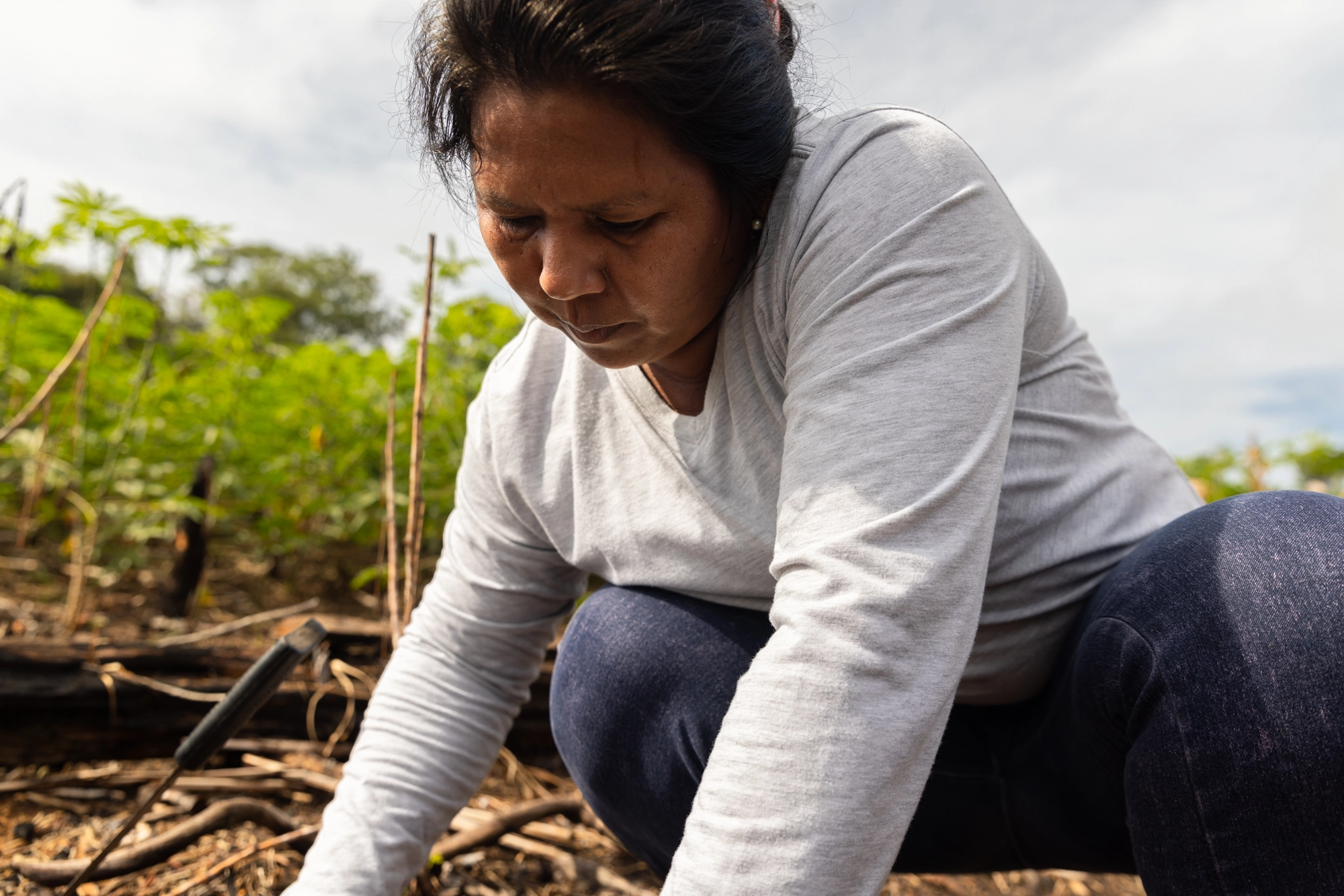
Image © Diego Pérez / SPDA - Conservation International
How are you working with your community to conserve and promote traditional indigenous knowledge?
We want to recover the sachapapa (purple yam), varieties of potato, and cassava, like manioc. We want to recover as many species as we can. Three to four women in Remanso are dedicating ourselves to recovering this knowledge.
We are planting cassava to make fariña (flour); and sugar cane to obtain sugar. We want to be healthy and not to drink things with chemicals. We also want to plant taricaya eggs (eggs from the yellow-spotted river turtle) because they are disappearing.
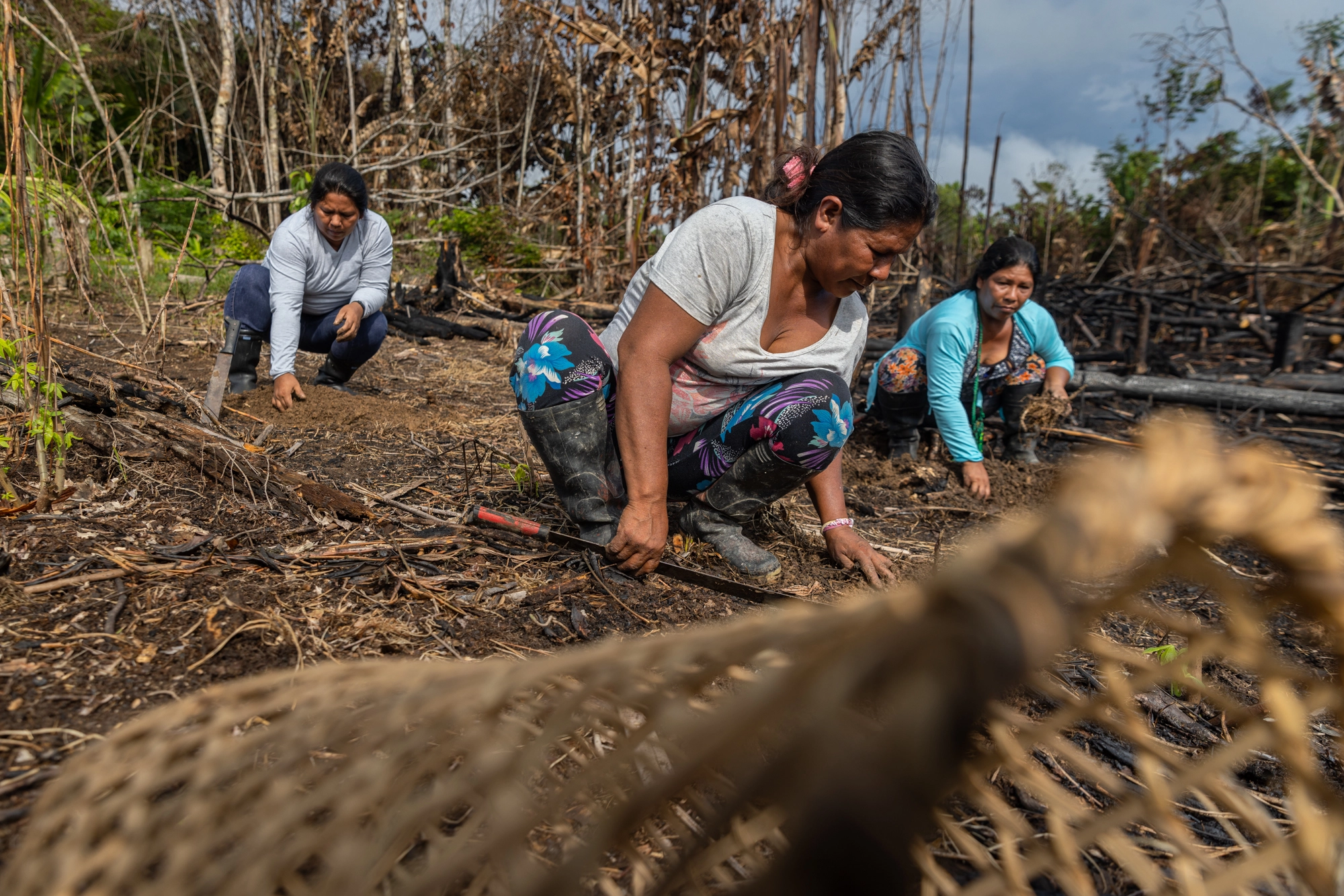
Image © Diego Pérez / SPDA - Conservation International
You recently won a scholarship to the Amazonia Indigenous Women’s Fellowship Program. What does this mean for your work?
I feel proud to have this scholarship. For me it is an achievement that I made, it is an achievement that I am not going to leave behind. I am going to move forward with the project. I am going to continue in the leadership of my people and of the four women I am going to work with. I hope that my people will see this, follow it and we will continue to grow and rescue what the land gives us. Maybe next year it won't be me, but another woman, that would be ideal.